
Back to Home
From Generic Beauty Promo to a Clear Treatment-Based Consultation Ad
Before

What’s Wrong
- The message is too generic
- No specific skin problem is called out
- No specific treatment is featured
- The ad looks more like a flyer than a real Meta ad
- The visual feels cluttered and low-trust
- There is no strong reason for the viewer to act now
Strategic Diagnosis
This ad tries to appeal to everyone, which makes it less relevant to anyone.
Instead of speaking to a specific person with a specific problem, it uses broad beauty language that does not create urgency or connection. The creative also weakens trust because it looks crowded and promotional rather than clean and premium.
Instead of speaking to a specific person with a specific problem, it uses broad beauty language that does not create urgency or connection. The creative also weakens trust because it looks crowded and promotional rather than clean and premium.
After
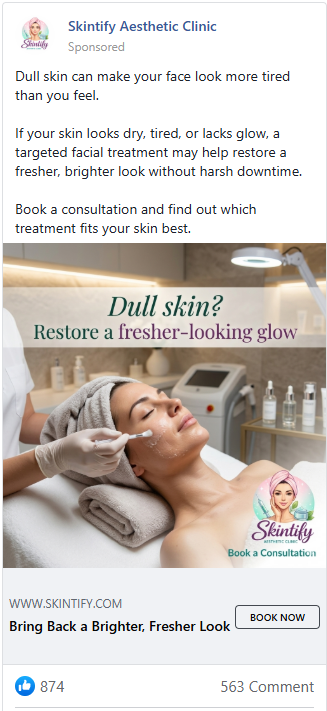
Improved Ad Direction
Focus on one visible problem: dull, tired-looking skin.
Make the ad feel more relevant by calling out that problem directly, using a cleaner treatment-focused visual, and guiding the viewer toward a consultation instead of a generic message inquiry.
Make the ad feel more relevant by calling out that problem directly, using a cleaner treatment-focused visual, and guiding the viewer toward a consultation instead of a generic message inquiry.
Why it Performs Better
The improved version is more specific, which usually makes the message feel more relevant to the right audience.
Instead of selling “beauty” in general, it connects one problem to one desired outcome. The visual is cleaner, the offer feels more credible, and the CTA leads the viewer toward a clearer next step.
Instead of selling “beauty” in general, it connects one problem to one desired outcome. The visual is cleaner, the offer feels more credible, and the CTA leads the viewer toward a clearer next step.
Key Takeaway
Specific problem-based ads usually outperform generic beauty promos because they attract higher-intent attention.