
Back to Home
From Vague Local Service Ad to a Specific Problem-Solution Offer
Before
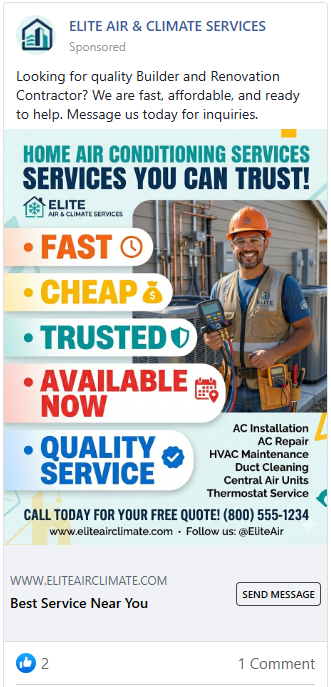
What’s Wrong
- The ad does not clearly say what service is being offered
- It uses generic claims with no strong meaning
- There is no specific problem being addressed
- The visual feels spammy and low-trust
- The headline is weak and vague
- The message does not qualify the right customer
Strategic Diagnosis
This ad is too general to create strong buyer intent.
People usually respond better when a service ad clearly describes the problem they are already experiencing. Generic words like “fast” and “trusted” do not create enough urgency or relevance on their own.
People usually respond better when a service ad clearly describes the problem they are already experiencing. Generic words like “fast” and “trusted” do not create enough urgency or relevance on their own.
After
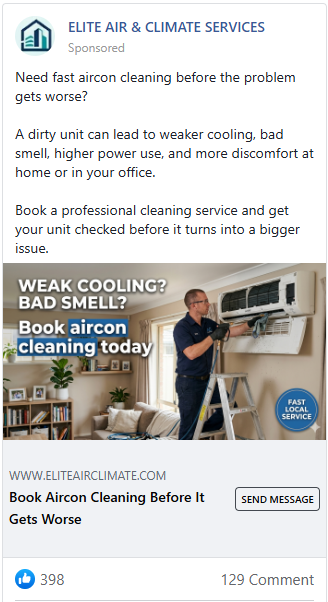
Improved Ad Direction
The improved version clearly names the service and the exact problem, which makes it easier for the right customer to recognize themselves in the ad.
That usually improves relevance, attracts better inquiries, and reduces low-intent attention from people who are not actually looking for that service.
That usually improves relevance, attracts better inquiries, and reduces low-intent attention from people who are not actually looking for that service.
Why it Performs Better
By focusing on one clear problem and solution, the ad acts as a filter.
It speaks directly to the person who has that specific pain point right now. This specific messaging creates much higher conversion intent than trying to reach anyone vaguely interested in "service".
It speaks directly to the person who has that specific pain point right now. This specific messaging creates much higher conversion intent than trying to reach anyone vaguely interested in "service".
Key Takeaway
Specific problem-solution ads usually bring in better-quality leads than vague service flyers.